1600 Sarno Road, Ste. 9 Melbourne, FL 32935
info@torresmediation.com

Call Now For Service!
Originally published: September 2025 | Reviewed by Kim Torres

In Austin, HOA architectural review disputes often involve changes to home design, exterior paint colors, and landscaping.
Mediation provides a faster and less costly way to resolve HOA design conflicts, while protecting homeowner rights and upholding community standards.
Mediation provides a faster and less expensive way to resolve HOA architectural review disputes, while preserving the relationships between homeowners and their associations.
Texas law encourages dispute resolution methods, such as mediation, to resolve HOA conflicts before they reach the courtroom.
This collaborative approach lets both sides work together toward solutions that meet everyone’s needs.
Common causes of HOA disputes include disagreements over rule enforcement, such as landscaping, parking, and architectural changes.
When these conflicts pop up, homeowners and HOA boards have several options to find a resolution without the stress and expense of litigation.
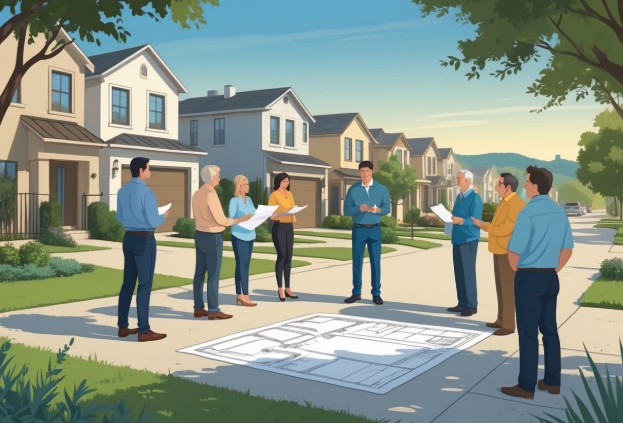
Austin homeowners frequently encounter disputes involving architectural control committees regarding property modifications and aesthetic standards.
The most contentious issues usually involve exterior color changes, landscape alterations, and structural additions that need committee approval.
Paint color disputes are one of the most common conflicts between homeowners and architectural committees. Many Austin HOAs maintain strict color palettes that homeowners must adhere to when repainting their homes.
Common Paint Disputes:
Roofing material and color changes spark similar conflicts. HOAs typically require specific shingle types or colors to maintain a uniform appearance in the neighborhood.
Some committees reject applications for earth tones or modern color schemes. Others deny requests for metal roofing or tiles that don’t match community standards.
Homeowners should check their HOA’s architectural guidelines before picking paint colors. Most committees provide approved color charts or request sample submissions before major painting projects begin.
Landscaping modifications often lead to disputes over architectural review in Austin neighborhoods. HOAs often regulate plant types, garden structures, and outdoor decorations to maintain a consistent community appearance.
Typical Landscaping Conflicts:
Tree removal requests can get especially complicated. Many HOAs require approval before anyone removes large trees, even on private property.
Outdoor lighting installations cause their own set of issues. Some committees restrict solar lights, landscape spotlights, or decorative string lights because they think they don’t fit the neighborhood vibe.
Water-wise landscaping is another tricky area. Austin favors drought-resistant plants, but some HOAs still want traditional grass lawns and ornamental plants, which need more water.
Property alterations and additions often spark architectural review conflicts when homeowners skip committee approval. Fencing disputes usually center on height, material, and placement rules.
Structure-Related Disputes:
Pool installations bring their own approval headaches. Committees review safety fencing, equipment placement, and screening for pool areas.
Home additions need extensive architectural review. Room additions, garage conversions, and covered patios all have to meet setback requirements and design standards.
Solar panel installations are another point of contention. Texas law protects solar rights, but HOAs still get to regulate placement and appearance to a certain extent.
Approval Timeline Issues:
Torres Mediation helps Austin families resolve HOA architectural disputes—from paint colors to landscaping—quickly and fairly. Protect your home and neighborhood harmony—contact us today to schedule your mediation.
If you’re ready to get started, call us now!
Texas Property Code Section 209 establishes rules for HOA architectural committees; however, homeowners retain certain rights, even when associations have broad powers over property changes.
Texas Property Code Section 209.00505 regulates architectural committees in property owners’ associations with more than 40 lots. This law defines the “architectural review authority” as the group responsible for reviewing and approving property improvements.
The statute only applies to larger HOAs and doesn’t cover communities still under development. During those periods, developers usually control the architectural review process.
Texas HOA law says associations have to follow their own governing documents when making architectural decisions.
The committee must review requests in accordance with established community standards and restrictive covenants.
Architectural Review Committees (ARCs) oversee property changes like structural, design, and landscaping modifications.
These committees may also be referred to by names such as Architectural Control Committees or Landscape Review Committees.
ARCs can approve or deny requests based on community standards. But their power isn’t unlimited under Texas HOA laws.
Committee Limitations Include:
The committee’s decisions must align with the HOA’s governing documents and established architectural guidelines.
These guidelines help prevent disputes and protect property values by making sure modifications meet community standards.
Even when HOAs hold broad architectural control, homeowners still have specific rights. Texas law seeks to strike a balance between the powers of association and individual property rights.
Homeowner Rights Include:
Texas law encourages mediation and alternative dispute resolution for architectural conflicts. HOAs must participate in good faith when homeowners request these services.
Property owners can challenge arbitrary or discriminatory committee decisions. They can also contest violations of procedural requirements in the governing documents.
HOA powers are significant, but not absolute. Associations have to follow their own rules and Texas HOA laws when exercising architectural control authority.
When HOA design conflicts arise, Torres Mediation offers neutral solutions that save time and money. Resolve disputes without court battles—reach out now to schedule your session.
If you’re ready to get started, call us now!
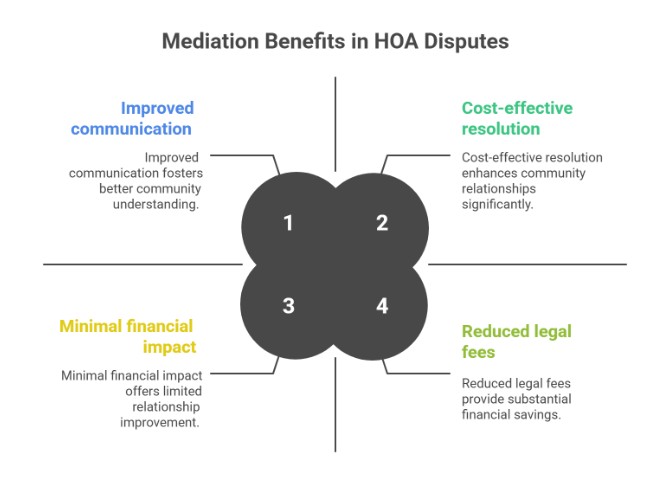
Mediation provides homeowners and associations with a structured yet flexible approach to resolving architectural conflicts.
The process opens up opportunities for meaningful dialogue about design standards and helps preserve important community relationships.
A trained mediator guides conversations between homeowners and HOA board members, remaining impartial and neutral. This neutrality helps everyone focus on the actual architectural guidelines instead of personal grievances.
The mediator facilitates discussions on how specific design elements align with community standards. They clarify which parts of a project meet requirements and which need tweaking.
Key discussion points often include:
Homeowners get to explain their design goals and reasoning. Board members can share concerns about setting precedents and neighborhood impact.
This kind of open dialogue often uncovers misunderstandings that initially sparked the conflict.
HOA disputes over architectural modifications often stem from unclear communication, rather than deep disagreements about rules.
Mediation sessions provide an opportunity for creative problem-solving that formal hearings cannot offer. Both sides can brainstorm modifications that address HOA concerns and still meet the homeowner’s needs.
The mediator helps identify which design elements are up for negotiation and which are non-negotiable. This clarity lets everyone focus on realistic solutions.
Common alternative solutions include:
Homeowners often find they can reach their vision with just minor changes. HOA boards sometimes realize that certain modifications actually improve community appeal when done right.
This collaborative approach leads to solutions neither side expected. It also fosters an understanding of design standards and how to apply them in real-world situations.
Mediation costs significantly less than litigation and helps maintain neighborly relationships. Most sessions resolve HOA disputes in a few hours, not months.
Financial advantages include:
The confidential nature of mediation protects both sides’ reputations. Mediation discussions stay private and can’t be used against anyone later on.
When mediation is effective, it strengthens community relationships by demonstrating good faith efforts to resolve conflicts. Homeowners feel heard, and HOA boards keep their authority to enforce standards.
The collaborative process often yields clearer architectural guidelines, which help prevent future disputes. Both sides walk away with a better sense of what’s expected for future projects.
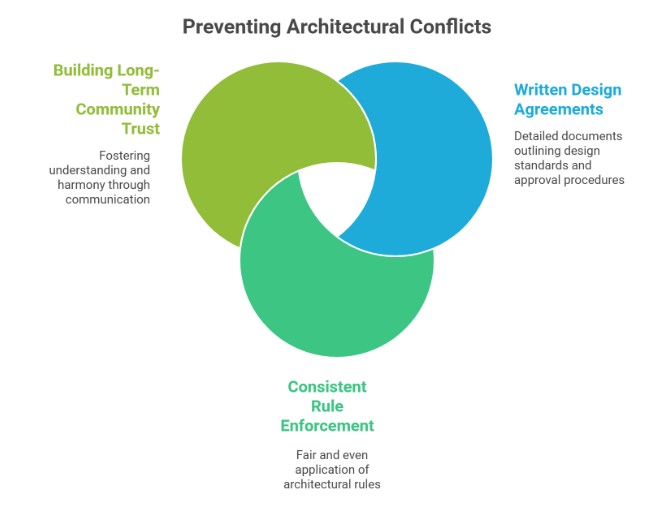
Successful mediation creates solutions that are effective and lasting, preventing the same disputes from recurring.
Clear written agreements and consistent enforcement foster trust and reduce future conflicts over architectural changes.
Mediated settlements should lead to detailed written agreements. These documents outline specific design standards and approval procedures.
Clear agreements cut down on confusion by spelling out what homeowners can and can’t do to their properties.
Key components of effective agreements include:
Written agreements protect both sides by setting enforceable standards. Homeowners receive a roadmap outlining the necessary steps to obtain approval.
HOAs have clear guidelines to use when reviewing requests. These agreements should cover common conflict areas, such as fencing, landscaping, exterior painting, and home additions.
The more specific the language, the less likely it is to be a source of future arguments. Good documentation helps everyone remember what they actually agreed to during mediation.
Fair and even enforcement of architectural rules helps avoid accusations of favoritism. HOAs can regulate the appearance of neighborhoods through architectural controls, but they need to apply these rules equally to everyone.
Enforcement strategies that reduce conflicts:
When enforcement gets inconsistent, people start to feel resentful. If one homeowner gets approval for a change and another is denied for the same thing, it’s no surprise that conflicts arise.
Board members need training on how to review requests fairly. That way, decisions remain based on established criteria rather than personal preference.
Clear documentation for approvals and denials helps homeowners see the reasoning behind decisions.
Trust between homeowners and HOA boards helps prevent minor issues from escalating into major conflicts. Effective conflict management helps preserve property values and fosters community harmony.
Regular communication builds understanding. Monthly newsletters, community meetings, and informal chats help people discuss issues before they escalate into disputes.
Trust-building activities include:
Transparency in the architectural review process shows homeowners that decisions are made fairly. When people understand the reasoning behind rules, they’re more likely to comply with them.
Board members should listen attentively to homeowner concerns and explain the rationale behind architectural standards. That kind of back-and-forth builds respect.
Austin homeowners dealing with architectural disputes with their HOAs actually have a few solid paths forward. Mediation offers a practical alternative to expensive court battles.
Most of these architectural conflicts come from people misunderstanding community guidelines. A neutral mediator can step in, clear up the rules, and help everyone find common ground.
Texas law actually encourages these alternative dispute resolution methods before matters are taken to court. Homeowners can request mediation, and HOAs are required to attend and participate in good faith.
Success depends on preparation. Homeowners should gather their documents, review the CC&Rs, and go in prepared to be flexible. HOAs perform better when they clearly explain their standards and remain open to reasonable compromise.
Professional mediators get both sides—they know homeowner rights and what the association is responsible for. They guide the conversation and help everyone find a solution that protects property values but still respects people’s needs.
The mediation process typically concludes within weeks, not months. That kind of speed helps maintain peace in the community and addresses everyone’s genuine concerns.
Keep your Austin neighborhood thriving by resolving HOA design disputes peacefully. Torres Mediation delivers lasting agreements—contact us today to schedule your architectural mediation session.
What is an HOA architectural review committee?
An HOA architectural review committee (ARC) is a group appointed by the homeowners’ association to review and approve exterior property changes. In Austin, ARCs oversee paint colors, landscaping, fences, and additions to maintain community standards and protect neighborhood property values.
What design changes cause the most HOA disputes in Austin?
The most common HOA design conflicts in Austin involve exterior paint choices, roofing materials, xeriscaping vs. turf, fencing height, and home additions. These disputes arise when homeowners seek greater design freedom, while HOAs prioritize preserving neighborhood uniformity and long-term property values.
Can mediation override an HOA’s architectural decision?
Mediation does not override an HOA’s decision but helps homeowners and boards negotiate mutually acceptable solutions. A mediator facilitates communication, clarifies rules, and explores compromises. If both sides agree, the mediated outcome becomes binding and can influence how the HOA applies architectural standards in the future.
How much does HOA mediation cost in Austin?
HOA mediation in Austin typically costs between $300 and $400 per hour, with expenses often split between the homeowner and the HOA. This is significantly less expensive than pursuing litigation, which can incur thousands of dollars in attorney fees and court expenses.
Is a mediated agreement legally binding in Texas?
Yes. In Texas, a signed mediation agreement is legally enforceable. Once both the homeowner and the HOA board approve the resolution in writing, it becomes a binding contract that can be enforced in court if necessary.
Do I need an attorney for HOA design mediation?
No. Homeowners are not required to bring an attorney to mediation. However, they may choose to consult one for additional legal advice. Most HOA design disputes in Austin are resolved successfully through mediation without the need for formal legal representation.
Can mediation prevent lawsuits over HOA design conflicts?
Yes. Mediation often prevents HOA design disputes from escalating into lawsuits. By addressing conflicts early—such as over paint colors or landscaping—families and HOAs can resolve issues privately, reduce legal costs, and maintain better long-term community relationships.